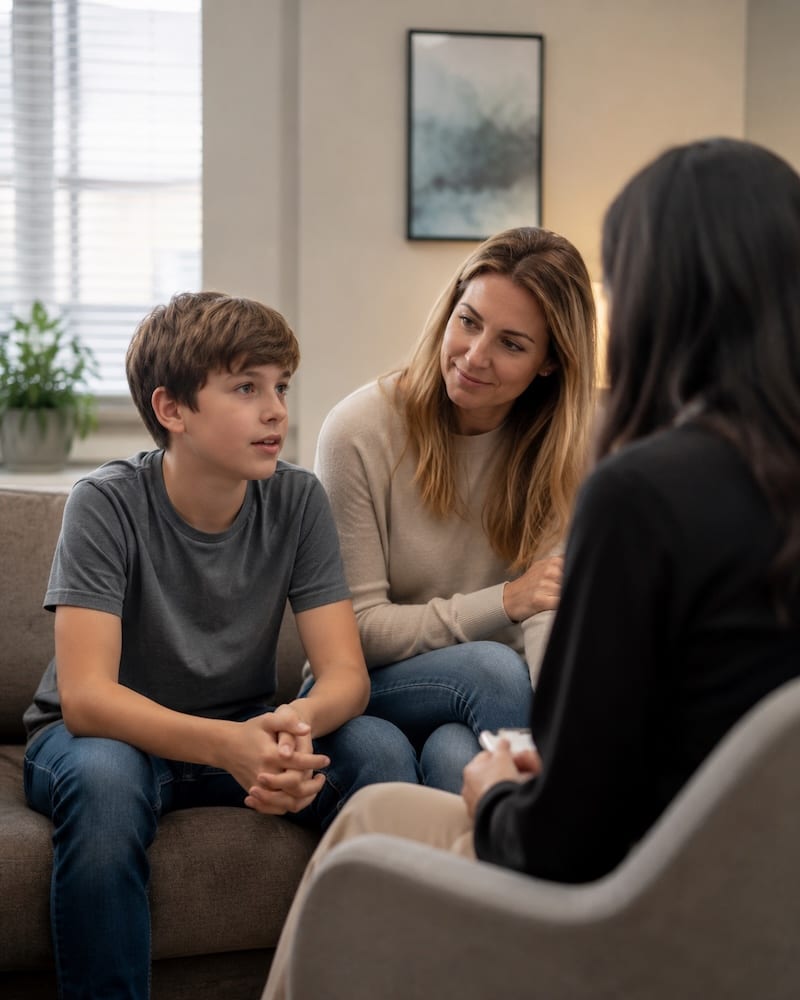
A note for parents
If you’re reading this page, you’re probably wondering whether complementary therapy is right for your child or teenager, and whether the therapist is the right person.
I’d encourage you to get in touch and talk it through before booking. I speak with every new parent before confirming a session – it gives us both a chance to make sure the therapy is genuinely a good fit, and for you to ask anything you’d like to ask.
Therapies available
Children and teenagers can receive any of my three core therapies:
- Reflexology – gentle pressure on specific points of the feet. Often chosen for sleep, anxiety, exam stress, tummy troubles, and general wellbeing.
- Indian Head Massage – massage of the shoulders, neck, scalp, and face. A particularly popular choice for teenagers dealing with tension headaches, screen fatigue, or exam pressure.
- Jikiden Reiki – the traditional Japanese form of Reiki, in which the child lies fully clothed on the couch and rests while I work. Often chosen for children who are highly sensitive, anxious, or simply need a quiet hour.
Which therapy is right for your child depends on their age, temperament, and what you’re hoping it will support. We can talk through the options when you get in touch, and I’m happy to say if I think a particular therapy isn’t the best fit.
Session length and price
| Session | Duration | Price |
|---|---|---|
| Children (2-12 years) | 30 minutes | £20 |
| Teenagers (13-18 years) | 60 minutes | £40 |
| Loyalty card – book 6, get the 6th free | — | — |
A shorter session works better for younger children – 30 minutes is plenty for most under-12s before they get restless. Teenagers tend to settle into a full 60-minute session comfortably, like an adult.
See the full prices page.
Safeguarding and what to expect
A parent or guardian stays with the child throughout the session. This is standard practice for anyone under 18 and is not negotiable. You’re welcome to sit quietly in the treatment room – there’s a comfortable chair – or on some occasions we might agree that being in the next room with the door open works better for a particular child.
I hold a DBS check. You’re welcome to ask to see it at any point.
I’m fully insured, including for treatment of children, through Alan Boswell (via NPA Insurance / Peach), with £5 million treatment risk cover.
Consent and communication. For younger children, consent and the health conversation happen with you as the parent. For teenagers, I involve them in the conversation too – they’re the ones receiving the therapy, and I think it matters that they feel genuinely part of the decision.
I’ll stop if they want to stop. Children don’t always know how to say “this is enough” with an adult they don’t know well. I watch for signs that a child has had enough, and we always have the option of ending early. You won’t be charged any differently if that happens.
Who it may help
Parents often bring children and teenagers to me for:
- Sleep problems and difficulty settling
- Anxiety and general worry
- Exam stress (particularly popular for GCSEs and A-Levels)
- Tension headaches, especially in teenagers
- Tummy upsets and digestive discomfort
- Sensory overload or feeling “wound up”
- Support during difficult times – grief, parental separation, school transitions
- A quiet hour for a highly sensitive or neurodivergent child
I’d always say – and I mean it – that complementary therapy is not a replacement for GP or specialist care. If your child has a specific health concern, please speak to your GP first. I’m happy to work alongside medical treatment where appropriate and where your GP is supportive.
My training for working with children
Alongside my core qualifications in Reflexology, Indian Head Massage, and Jikiden Reiki, I hold specific training for working with children:
- Rainbow Kids Touch Therapy and Relaxation Certificate with Giuliana Wheater – a specialist course in adapting touch therapy for children, including those with additional needs
- Therapies for Special Needs Certificate with Giuliana Wheater
- NCFE Level 2 Certificate in Children’s Care, Learning and Development
These are in addition to my full Reflexology, Indian Head Massage, and Reiki training. You can see the complete list of qualifications on the about page.
I’m a full member of the Association of Reflexologists (MAR), a member of the Federation of Holistic Therapists (FHT), and a member of the Jikiden Reiki UK Association. I abide by their professional standards and codes of conduct.
Frequently asked questions
From what age do you treat children?
I work with children from the age of 2 upwards. For babies and very young children under 2, I’d suggest speaking to a specialist in paediatric massage or paediatric Reflexology who works specifically at that end of the age range.
Does my child need to stay still for the whole session?
Most children settle remarkably quickly once they’re on the couch, but a 30-minute session is deliberately shorter to allow for wriggling, chatting, and getting comfortable. I work around the child rather than expecting them to work around me.
Can I stay in the room?
Yes – and for under-18s I require it. You’re welcome to sit quietly, read, or work. Some children are more relaxed if a parent is within sight; others are more relaxed if you’re just on the other side of the door. We’ll work out together what’s best.
What should my child wear?
Comfortable, loose clothing. For Reflexology, they stay fully clothed with just shoes and socks off. For Indian Head Massage, they can keep a vest or t-shirt on if they’d prefer.
My child is neurodivergent / has additional needs. Is this suitable?
Quite possibly, yes. My training includes specific work on therapies for children with additional needs, and I’ve worked with neurodivergent children and teenagers before. Please tell me as much as you’d like to share when you get in touch, and we’ll talk about what would work best – that might include a shorter first session, visiting the space beforehand, or adjusting the approach in ways that suit your child.
What if my child decides they don’t want to continue partway through?
We stop. I watch for signs that a child has had enough and we always have the option to end early. You won’t be charged differently.
Do you offer therapy for exam stress specifically?
Yes – this comes up often, particularly with teenagers during GCSE and A-level season. Indian Head Massage and Reflexology are both popular choices. A short course of weekly sessions in the run-up to exams is a common pattern.