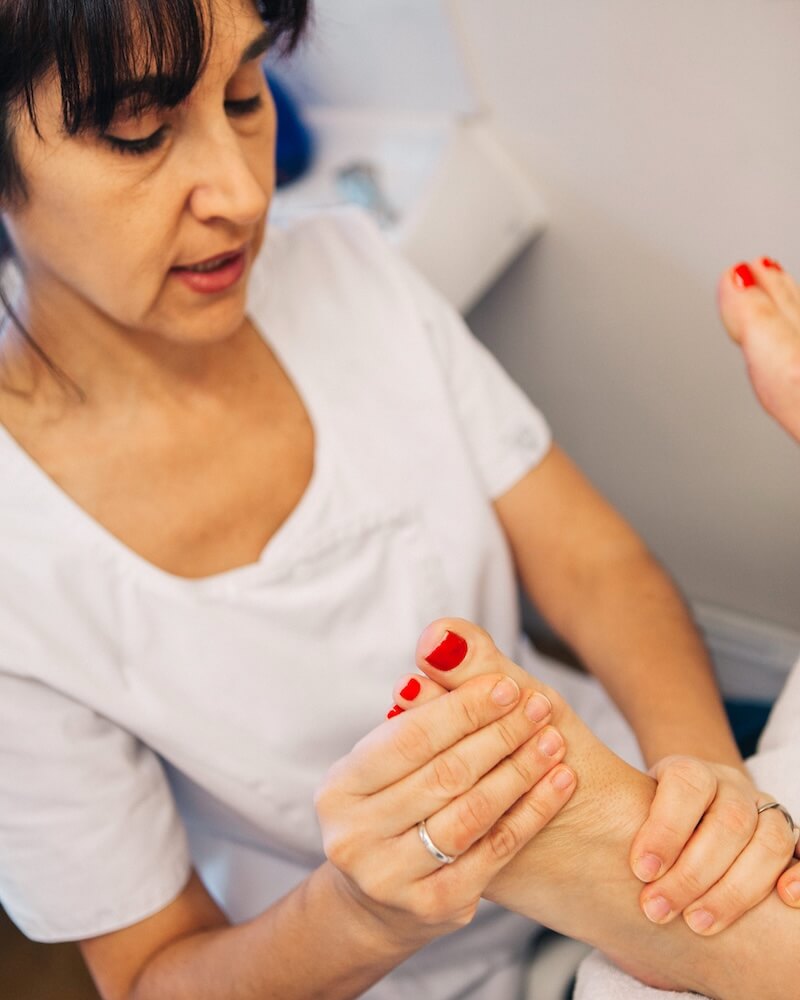
What Reflexology is
Reflexology is a complementary therapy based on the principle that different areas of the feet correspond to different parts of the body. By applying focused pressure to specific points on the feet, a trained reflexologist aims to support the body’s own sense of balance and relaxation.
It’s non-invasive, gentle, and you stay fully clothed throughout. The only things that come off are your shoes and socks.
Reflexology is not a substitute for medical treatment, and I’ll never claim it is. What clients tell me is that sessions leave them feeling deeply relaxed, more rested, and better able to cope with whatever they’re carrying that week.
What happens in a session
When you arrive, we’ll sit down for a short conversation about how you’re feeling, anything you’d like me to focus on, and any relevant health information. First appointments include a longer consultation so we have time to get this right.
You’ll then settle onto the treatment couch, fully clothed, with just your feet exposed. I use a comfortable chair at the end of the couch to work on your feet. Most clients close their eyes and many drift off – that’s completely fine.
Sessions are available in 60, 90 or 120 minutes (£40, £55 or £75). Your first appointment includes an extra 30 minutes at the start, to allow time for a full consultation.
Afterwards, I’ll offer you a glass of water and we’ll have a brief chat about the session. You’re welcome to take your time – the treatment room sits within the grounds of the Riversdown Estate, and there’s a lovely public footpath if you’d like to walk before driving home.
Who it may help
Reflexology can be a supportive therapy for people dealing with:
- Stress and everyday tension
- Poor sleep or disturbed sleep patterns
- Headaches and neck and shoulder tightness
- Low energy and fatigue
- Anxiety and feeling overwhelmed
- Back and postural discomfort
- General wellbeing and preventative self-care
It can also be part of your care during pregnancy, from the third trimester onwards, provided your pregnancy is progressing normally. If you’re pregnant, please mention this when you get in touch so we can discuss whether Reflexology is appropriate for you at this stage.
I’d never suggest Reflexology as a replacement for medical care. If you have a specific health concern, please speak to your GP or specialist first.
Additional techniques I may use
Where appropriate, and if you wish, I may incorporate additional techniques into a Reflexology session – cupping, tuning forks, or Thai wooden sticks – at no extra time or cost. Which ones we use depends on what you’ve come for and what your body seems to need on the day. We’ll talk through the options before we begin.
Read more about add-on therapies.
Session length and price
| Session | Duration | Price |
|---|---|---|
| Standard | 60 minutes | £40 |
| Extended | 90 minutes | £55 |
| Long | 120 minutes | £75 |
| Children (2-12 years) | 30 minutes | £20 |
| Loyalty card – book 6, get the 6th free | — | — |
See the full prices page for combined-therapy sessions, gift vouchers, and other details.
My training in Reflexology
I’ve been practising Reflexology for ten years and I’m a full member of the Association of Reflexologists (MAR), which means I abide by their professional standards and code of ethics. I also hold membership of the Federation of Holistic Therapists (FHT).
My Reflexology training includes:
- VTCT Level 3 Diploma in Reflexology, Peter Symonds College, 2016
- Lymph Drainage Reflexology (RLD) with Sally Kay
- Manzanares Method® of Reflexology (science-based) with Dr Manzanares, MD
- Pain Management – an Introduction to Nerve Reflexology, with Dr Carol Samuel, PhD
- Maternity Reflexology, Mauricio Kruchik Method
- Reflexology and the Treatment of Pain, Mauricio Kruchik Method
- Spinal Advance Reflexology
- Focussed Reflexology and its use in female reproductive health
- Visual Reflexology workshop
- Touchpoint International Summer School 2020 (Hip, Groin, Sciatica, Knee) with Dorthe Krogsgaard and Peter Lund Frandsen
I commit to regular continuing professional development and add new techniques to my practice each year. Read more on the about page.
If you’re interested in Reflexology Lymph Drainage specifically – often chosen by clients recovering from breast cancer surgery or managing secondary lymphoedema – I have a dedicated RLD Reflexology page.
Frequently asked questions
What does a Reflexology session feel like?
Most people describe it as deeply relaxing. You’ll feel firm, focused pressure on different areas of your feet. It’s not ticklish – the pressure is purposeful rather than light – and it shouldn’t be painful. If anything feels too much at any point, just say, and I’ll adjust.
How many sessions will I need?
There’s no fixed number. Some clients come for a one-off treat, others weekly or fortnightly for a few weeks to address a specific issue, and many settle into a monthly session as part of their ongoing self-care. We can talk about what feels right after your first visit.
Do I need to undress?
No – just your shoes and socks. You stay fully clothed and covered with a blanket if you’d like one.
Is Reflexology safe during pregnancy?
I offer Reflexology from the third trimester onwards, provided your pregnancy is progressing normally. Please mention that you’re pregnant when you get in touch so we can have a conversation first.
What’s the difference between Reflexology and a foot massage?
A foot massage works on the muscles and tissues of the feet for their own sake. Reflexology uses specific pressure points that correspond to the rest of the body, following a map developed over decades of practice. The techniques, intention, and training are different, even though both involve the feet.
Just had a fabulous Reflexology treatment with the lovely Gemma. She made me very comfortable and is very caring. I now feel very relaxed and pampered.
Sara, Liss
After researching for reflexologists, I came across Gemma’s website and from her ‘about me’ section, I already felt like she was giving me a hug. When I went for my first appointment, Gemma surpassed my expectations with so much warmth, kindness as well as skill in her communication and Reflexology treatment. I felt completely at ease as soon as I was welcomed into Gemma’s space and felt calmer for several days after the treatment. I’m looking forward to seeing Gemma again and once again being able to feel that sense of relaxation I hadn’t felt in a long time. Thank you Gemma.
Sammy, Alresford
Thank you so much for such reviving and rebooting Reflexology sessions. Your knowledge and technique are really effective.
Milly, Eastleigh